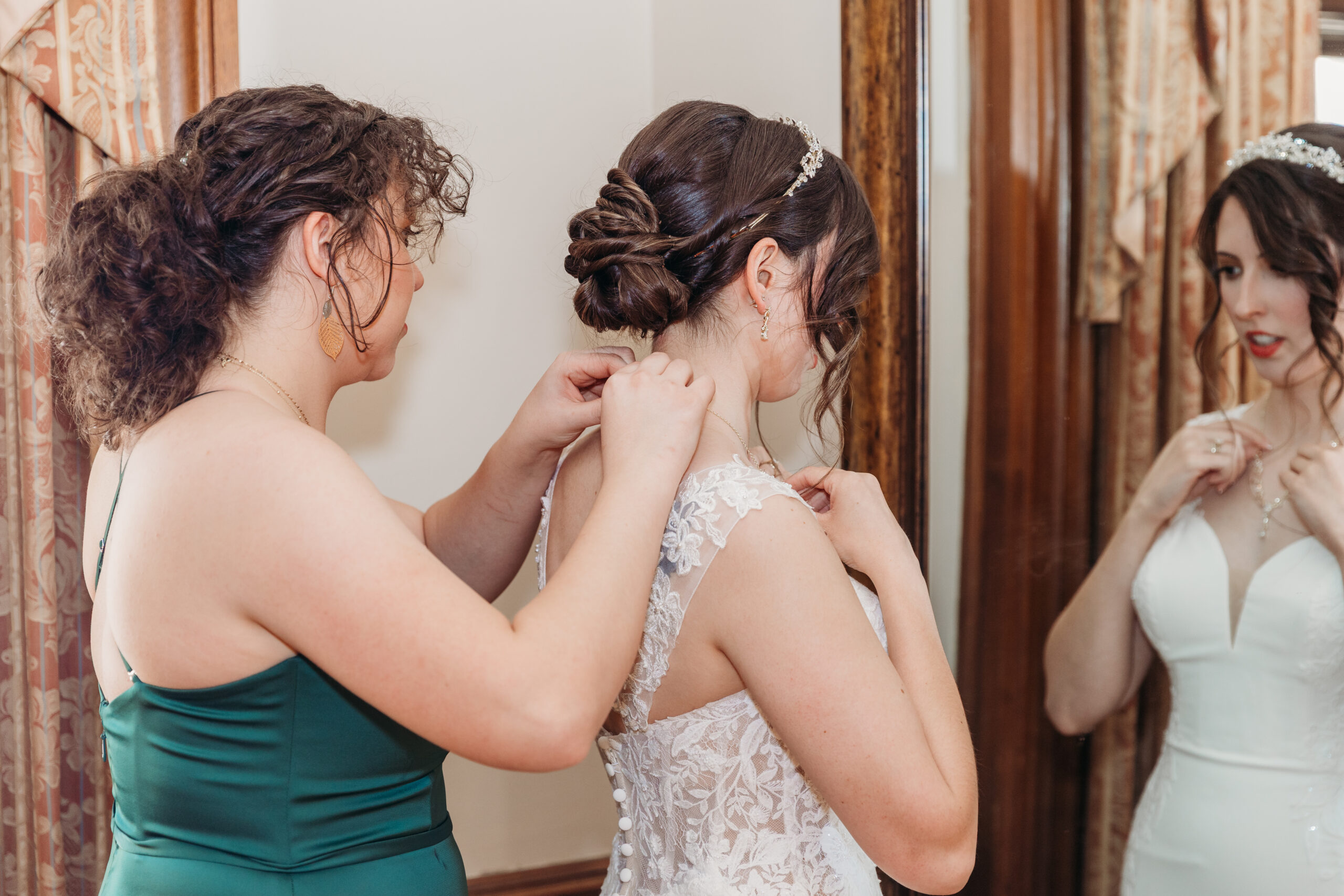
If you’ve ever wondered how your hair and makeup timeline actually comes together on your wedding morning, we sat down with Christy Monti of Monti Makeup and Mindfulness to get the inside scoop. Christy owns a studio in Camillus, New York, and has been doing makeup professionally since 2008, starting her career at MAC Cosmetics before training as an esthetician and becoming a certified yoga teacher. That mix of backgrounds shows up in how she approaches wedding mornings: calm, organized, and focused on making sure every bride feels like herself.
Here’s what she shared with us on Shoot the Vows.
When Should the Bride Get Her Makeup Done?
A lot of brides assume they should go last so their makeup stays fresh the longest. Christy says that’s actually the opposite of what she recommends.
“I usually try to aim for mid,” she told us. Going last means the timeline gets tighter and tighter as the morning goes on, and if anything runs behind, the bride ends up rushed right before the ceremony. That’s not exactly the relaxed energy you want heading into your first look or walk down the aisle.
Going in the middle also makes sense logistically. If there’s a first look planned, the other bridesmaids are going to be sitting around waiting anyway, so it works out better for the bride to step away and get ready while the group naturally has downtime.
Always Build in Buffer Time
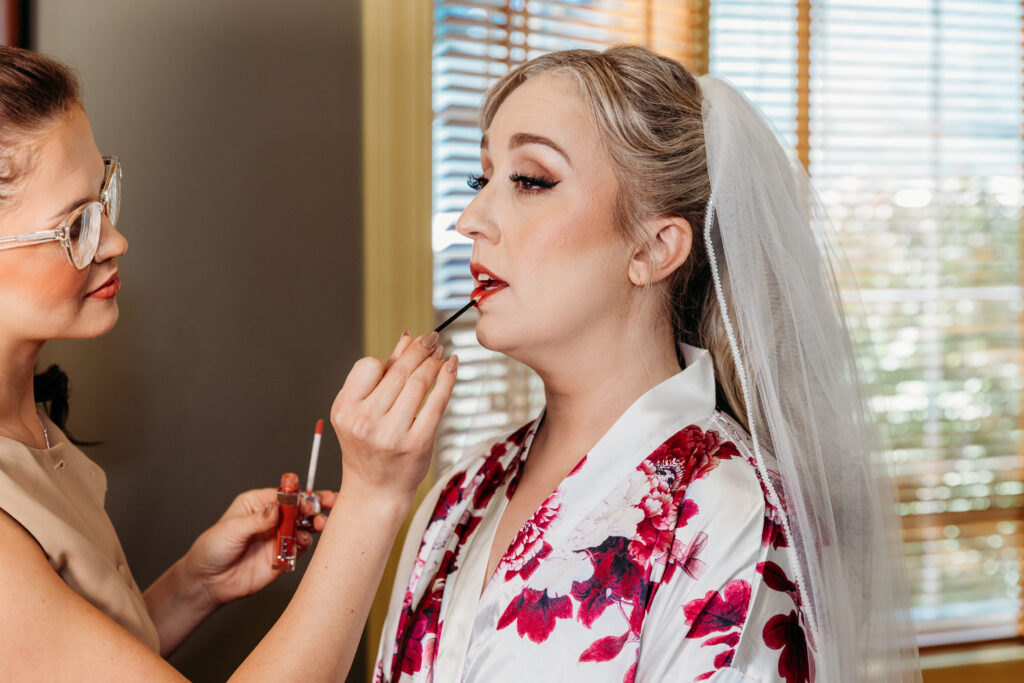
This might be the single most useful piece of advice in the whole conversation. Christy plans extra time into every wedding day timeline, usually 15 minutes for touch ups and another 15 minutes for the unexpected. Someone’s in the bathroom, someone’s on the phone, someone needs one more photo. It always happens.
“I just started doing that, and it’s a game changer,” she said. Yes, it means getting up earlier. But not rushing at the end makes the whole morning smoother for everyone involved, including your photographer and your nerves.
Skin Prep Starts Weeks Before Your Wedding
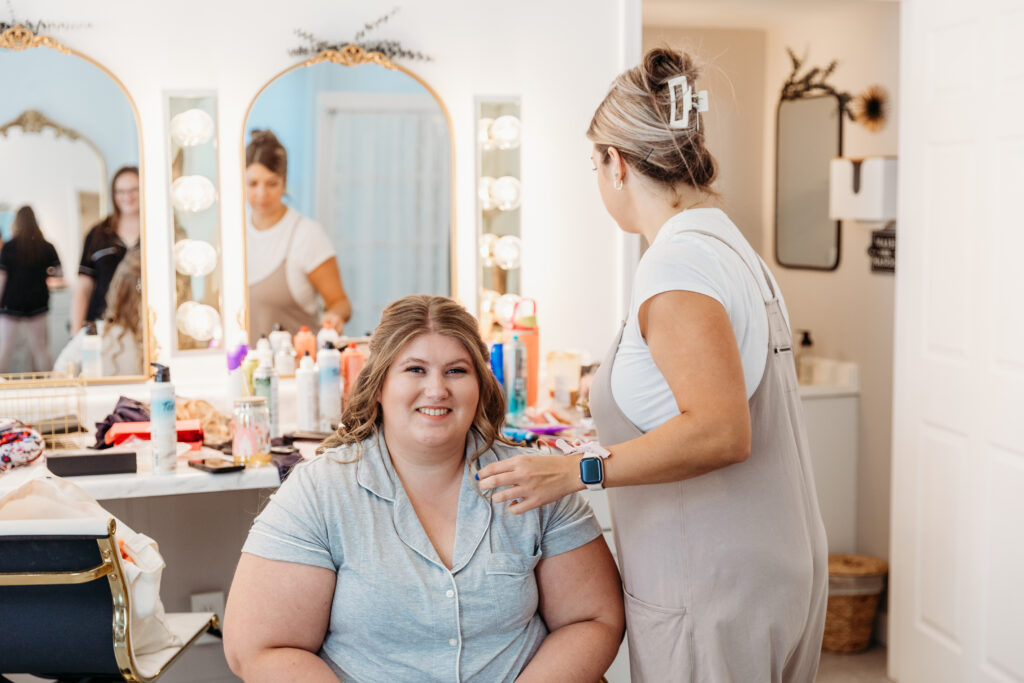
Christy was clear that most of the work happens before a bride ever sits in her chair. A few things she recommends:
Eyebrows. Get them shaped at least four days before the wedding, whether through waxing or threading. Stray hairs and peach fuzz around the brow can throw off how clean your eye makeup looks in photos.
Retinol. If you use retinol, stop before getting a brow wax. Retinol can leave skin more sensitive, and combining it with waxing can cause your skin to lift.
Dermaplaning. This one gets a yes, but not on the wedding day itself. Since it’s often paired with a facial and takes about an hour, plan it in advance, not the morning of.
New treatments in general. Christy’s rule of thumb: don’t try anything for the first time within six months of your wedding. That includes lash extensions, which can trigger allergic reactions even after several uneventful appointments. She shared a story about a friend who had no issues with lash extensions for months, then suddenly had a reaction so severe her eyes swelled shut.
Her advice? Strip lashes tend to be a safer, more controllable option for wedding day, since you can test different styles at your trial and know exactly what you’re getting.
The Trial Run Is About More Than Just the Look
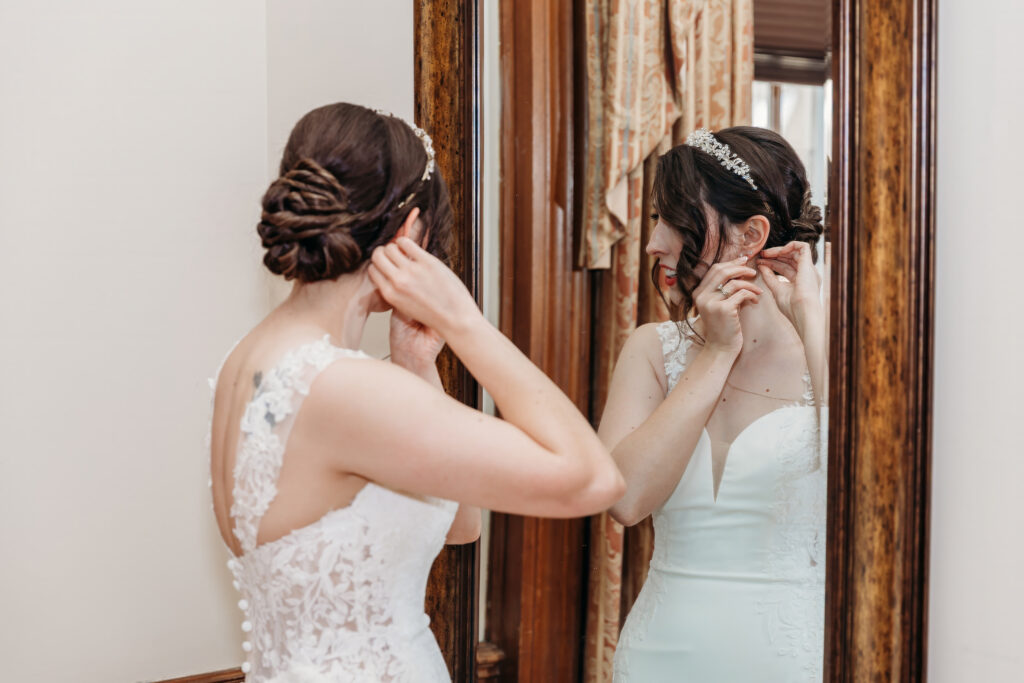
Christy sees the trial as an investigation as much as a style preview. Come with questions, and bring real reference photos, not AI generated Pinterest inspiration. She’s noticed a shift where a lot of the “inspo” images clients bring in are AI generated rather than actual makeup work, which makes it harder to set realistic expectations.
She also shared a story about a bride whose trial went badly with a different artist entirely. Even though the bride specifically asked for something light and natural, she ended up with dark, dramatic lashes and had to run to CVS for a replacement pair before an event. If something feels off at your trial, that’s the moment to speak up, not the wedding morning.
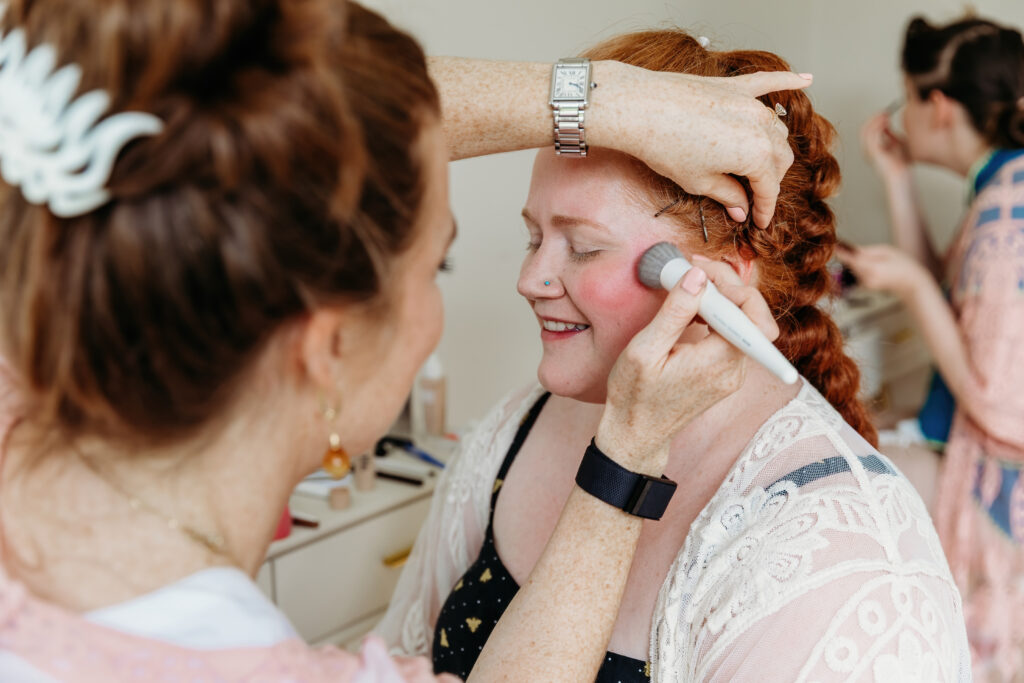
Airbrush Makeup: Proceed With Caution
Christy isn’t a fan of traditional airbrush foundation, and she’s upfront about it. Without proper skin prep and primer, airbrush makeup has a tendency to crack and settle into fine lines over the course of the day. She’s tried multiple systems over the years and just never loved the results, even the newer hydrating formulas.
If a bride really wants that finish, Christy will sometimes do color correction and add a light layer of spray rather than going full airbrush. Her take: a good traditional foundation applied correctly can easily last through a full wedding day.
Christy’s One Piece of Advice for Couples
When we asked Christy for her best overall advice, whether about makeup or the wedding in general, her answer had nothing to do with products.
“Do what you want to do, not what mother of the groom or mother of the bride wants to do,” she said. It’s easy to get caught up trying to please everyone else, but at the end of the day, it’s your decision. As Christy put it, weddings (and having kids) have a way of showing you exactly who’s willing to share an opinion whether you asked for it or not.
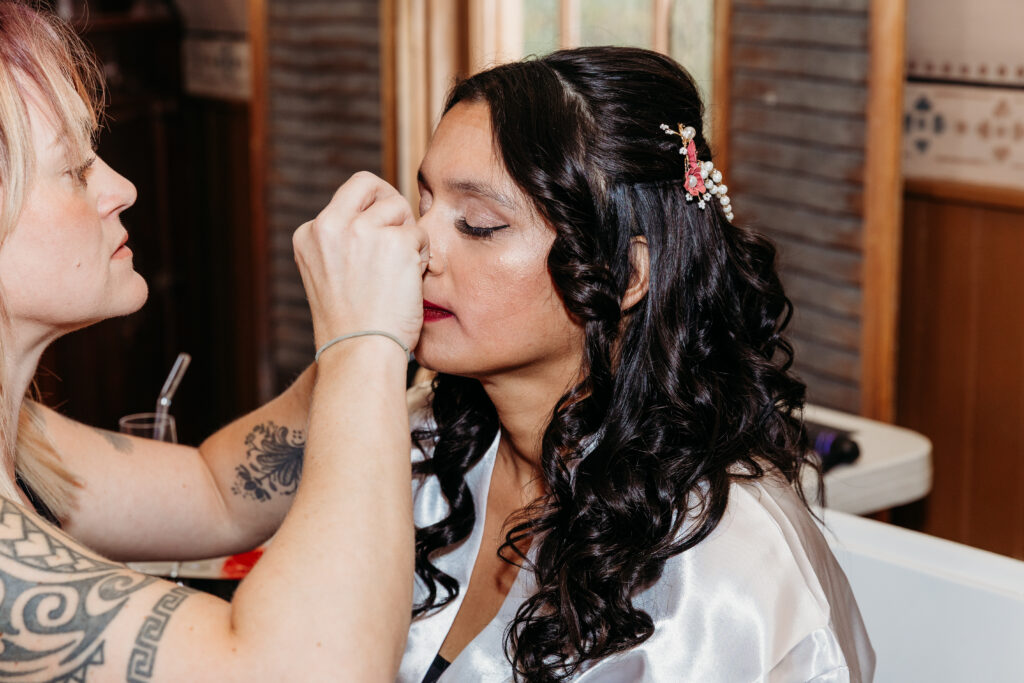
Final Thoughts
From building in buffer time to knowing when to schedule your trial, Christy’s advice comes from years of hands on experience with real wedding mornings, not just the finished photos. If you’re planning your own wedding day timeline, her biggest takeaways are simple: start your skin prep early, don’t experiment right before the big day, and give yourself more time than you think you need.
Want more tips like these? Check out the rest of our Shoot the Vows episodes for honest conversations with the vendors who make your wedding day happen.