Flowers are one of those wedding details that look simple from the outside and reveal their complexity the moment you start planning them. We sat down with Courtney Rapp, owner of Westcott Florist in Syracuse, NY, who has been working in the floral industry for over 20 years, to get an honest look at what really goes into wedding flowers, where couples spend unnecessarily, and what a good florist actually needs from you to do their best work.
Why Wedding Flowers Cost What They Cost
The price of wedding flowers surprises a lot of couples, and Courtney understands why. But there is a lot happening before a single arrangement ever makes it to a venue.
“They’re picked on a farm in another country. They’re boxed up and they’re shipped to us. They have to be recut and hydrated. They have to be cleaned.”
From there, the flowers need to be stored at the right temperature, sorted, and prepared before the design process even begins. Add to that the discard from damaged stems and petals, the cardboard and packaging waste, and the significant time spent in the planning and consultation process, and the cost starts to make a lot more sense.
Flowers are perishable. That changes everything about how they are handled, priced, and delivered.
The Biggest Misconception: Flowers Will Match Exactly
One of the most common points of friction between brides and florists is color matching. Couples often arrive with fabric swatches, dress samples, and very specific expectations about shades, and Courtney has to gently explain that flowers do not work the way fabric does.
“They’re natural. They’re going to go on a bush somewhere.”
Hydrangeas are a perfect example. Even on the same bush, one bloom might be a pinky purple while another reads more white, simply because of the soil, light, and water conditions where it grew. Courtney notes that lighting at the venue adds another layer of complexity: a flower that looks one way indoors under warm light will look completely different in natural daylight.
The only way to guarantee an exact color is to spray or dye the flowers, which Courtney does not recommend. Dye affects the viscosity of the water the flower takes up, which limits hydration and causes blooms to droop. It can also transfer onto clothing. The tradeoff is never worth it.
The goal is always to get as close as possible while working with what nature actually provides.
Artificial Flowers: Not the Budget Solution Most People Think
A lot of couples assume that going artificial will save them money. Courtney is direct: it usually does not.
“To get something that’s real and natural looking, you have to pay up for that.”
Quality artificial flowers sourced from a wholesale floral supplier cost significantly more per stem than the versions available at craft stores. And those craft store options, while cheaper, do not mimic real flower colors, textures, or shapes in any convincing way. Against the fabric of a dress or in natural light, the difference is obvious.
Courtney also points out that artificial flowers photograph poorly compared to real ones. The vibrancy is off. The colors are not true to life. For photographers, that matters.
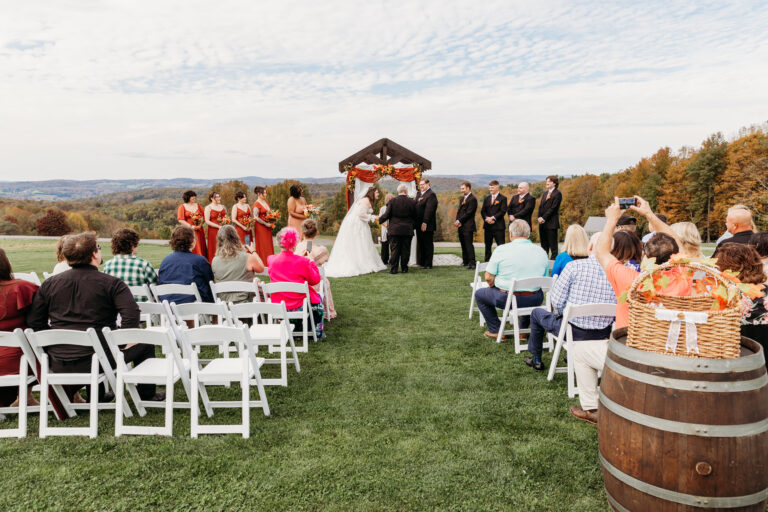
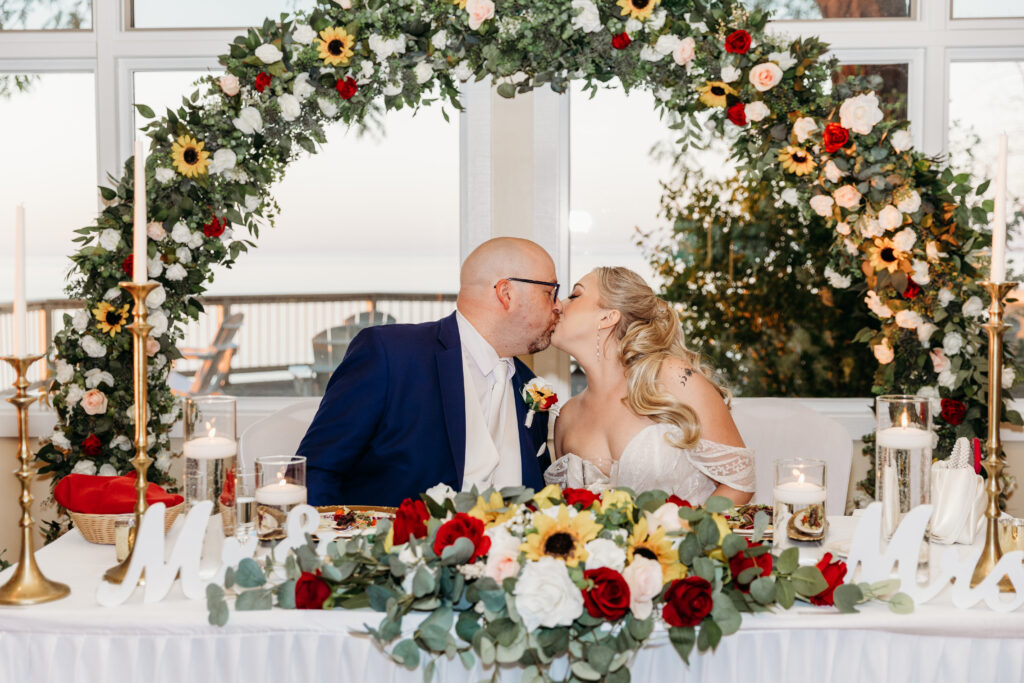
There are limited cases where Courtney will use artificial flowers, and she is candid about where that applies: high up on a ceremony arch where guests are seated 50 feet away and a bridal party is standing in front of it. At that distance and angle, no one is looking closely, and the arrangement serves its visual purpose. Anywhere guests will walk past or see up close, she recommends real flowers every time.
How to Think About Your Ceremony Arch
Speaking of the arch: Courtney is straightforward about where couples tend to overspend.
“You’re not there very long. Nobody is going to walk by it.”
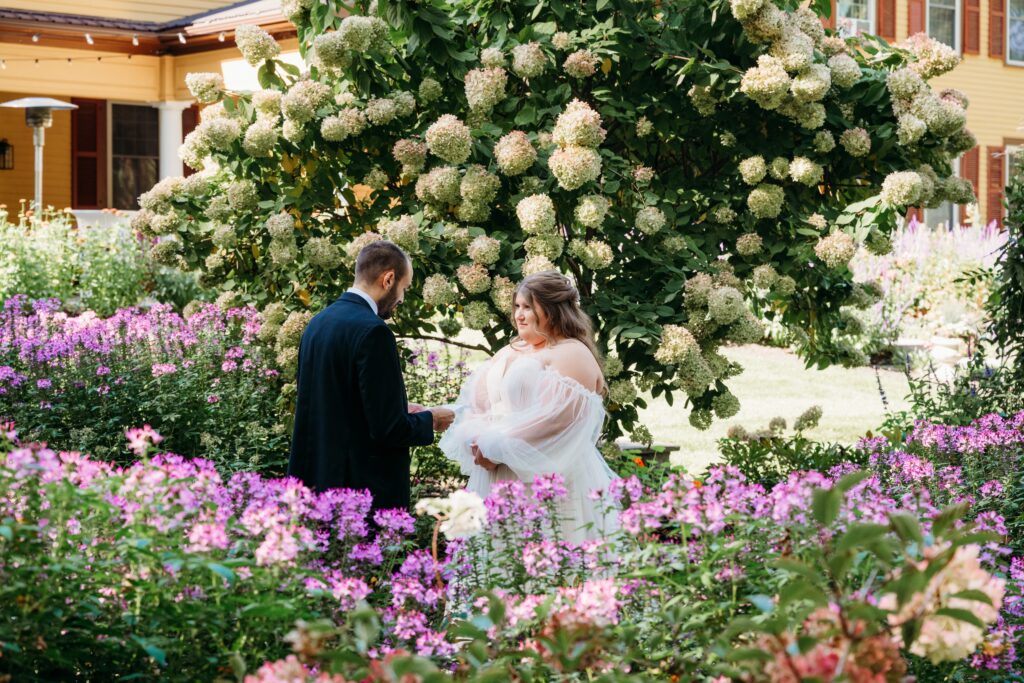
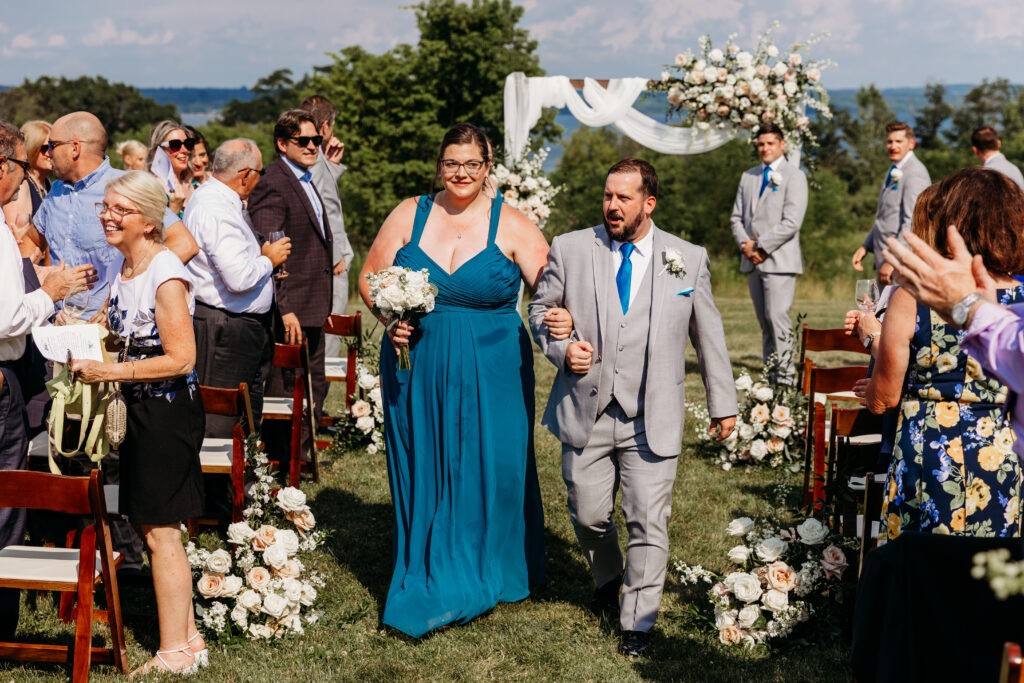
The ceremony is relatively brief. Guests in the back rows may never get closer than 50 feet from the arch. The bridal party stands directly in front of it during photos. For these reasons, Courtney often suggests redirecting that budget toward pieces that guests will actually interact with, like arrangements along the aisle entrance or a statement piece at the reception.
She is also skeptical of the trend of lining ceremony aisles with floral arrangements at every chair. While it looks beautiful in concept, she raises a practical issue: those arrangements are designed to be viewed from one side, which means repurposing them for reception tables is harder than couples expect. One side of the arrangement will always be unfinished since it was built to face outward along the aisle. They cannot simply be moved to a tabletop and look the same from all angles.
If you love the aisle look, a few statement pieces at the entrance can create that grand feeling with much better repurposing potential afterward.
Where to Spend and Where to Save
Courtney’s consistent advice is to prioritize your bouquets. The bridal bouquet is in almost every photo. It travels with you through the entire day. It deserves real, quality flowers and a skilled hand putting it together.
For table centerpieces, there are real ways to stretch the budget. Bud vases from Wegmans or simple grocery store flower arrangements can look beautiful on a table, especially if you purchase your own vases. The key is knowing which elements guests will notice and which ones fade into the background.
One area where flexibility helps your budget: trust your florist to fill in the details. Courtney works within color palettes and styles, and being too prescriptive about every single stem can actually limit what she is able to do in the days before your wedding.
“Sometimes that week, I have access to something that I don’t normally have and I would pull it together. Just let me do it.”
Giving your florist some room to work with what is freshest and most available at the time of your wedding often results in better flowers at a better price than locking in a specific stem-by-stem list months in advance.
What a Good Florist Actually Needs from You
Courtney sends about 15 questions to brides before the initial consultation. The basics, like venue, timing, and contact information, are handled before you even sit down, so the meeting can focus on the creative conversation.
From there, she wants to understand:
Your dress. The neckline, texture, embellishments, and silhouette all affect how a bouquet should be designed. A low neckline paired with a tall, upright bouquet will cover the most beautiful part of the dress. A heavily laced gown calls for something different than clean satin.
Your table setup. Round versus rectangular tables, linen choices, and table counts all influence what centerpiece styles will actually work in the space.
Your venue. A bright white-walled ballroom and a dark wood barn are going to read completely differently in photos and in person. Flowers that pop beautifully in one setting can get lost in the other.
Your Pinterest board, with a caveat. Courtney appreciates when brides come in with visual references. It helps her identify patterns in what they are drawn to. However, she is candid that a significant portion of floral inspiration online is AI-generated or heavily edited, showing flowers in colors, shapes, or arrangements that simply do not exist in nature. Her job becomes translating what you are drawn to into something that can actually be created with real flowers.
If a photo shows a color or variety that cannot be sourced, she pulls up her own reference library of real flowers in real colors to help bridge the gap.
On Bouquet Style and Size
Courtney does not do small bouquets. Not because she refuses, but because the wildflower and organic styles that are popular right now require a certain stem count and variety to actually achieve the look. Fewer stems just gives you something that looks unfinished, not something that looks casually natural.
She also brings up a practical design rule that applies whether you are hiring a florist or doing flowers yourself: always work with odd numbers. One stem, three stems, five stems. Even numbers create visual tension and symmetry that reads as stiff. Odd numbers feel natural and balanced.
On the topic of specific flowers, she discourages lilies in bouquets for a few reasons. The petals crease when bumped. The blooms are large and can overwhelm the arrangement. They are difficult to wire securely. And she will always offer alternatives that give you the feeling you are going for without the practical drawbacks.
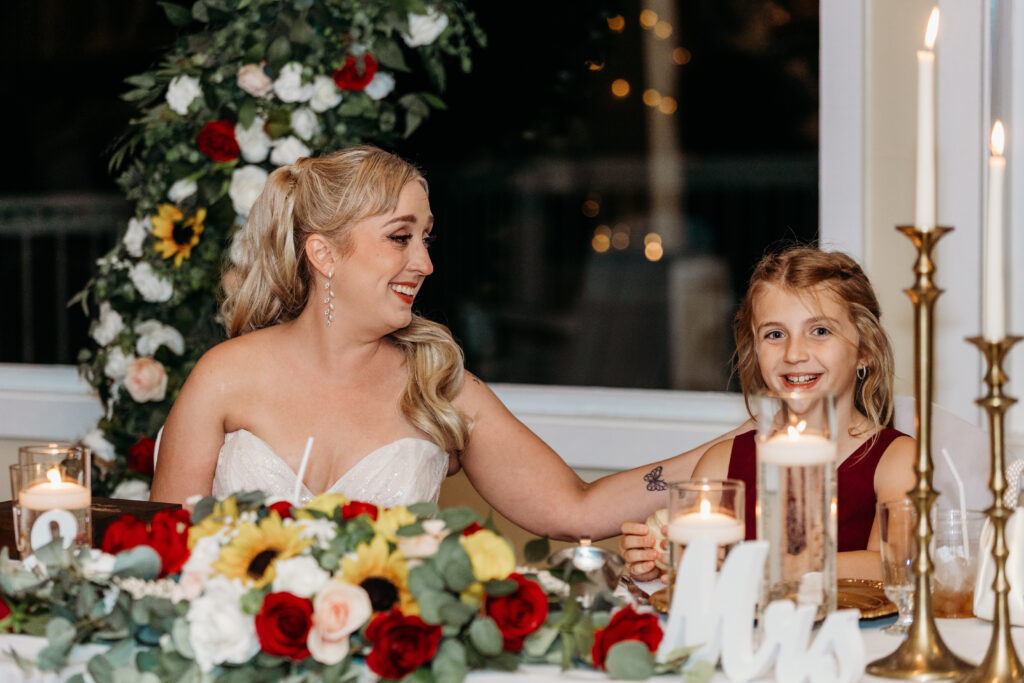
The same applies to sunflowers. The heads are heavy and tend to droop once cut, which means a bouquet of sunflowers often looks nothing like the inspiration photo. They work beautifully in table arrangements where the angle is different.
Working with Your Florist, Not Against Them
Courtney is clear that her primary job is education. Couples are not expected to know flower varieties, seasonal availability, or the technical reasons why certain designs work and others do not. That is what she is there for.
“I love your vision. It just doesn’t have to be for me, it’s for you. But I’m going to tell you the whys behind it.”
She will never simply say no to an idea. She will explain the reasoning, propose an alternative, and find a way to honor the spirit of what you are envisioning within the constraints of what is actually possible. That is the difference between a florist who has been doing this for 20 years and someone pulling together arrangements for the first time.
Trust the process. Come in with ideas. Listen when they push back. The result will almost always be better than what you originally pictured.