Every flawless wedding you have ever attended was probably held together behind the scenes by someone quietly solving problems you never knew existed. Shattered mirror signs. Torrential downpour during chair setups. A groom who spent the night before his wedding in jail.
In a recent episode of Shoot the Vows, hosts Caitlyn and Kalee sat down with Eliza Jane, owner of Eliza Jane Events, a wedding planning company based out of Rochester that travels wherever couples need them. What followed was one of the most candid, funny, and surprisingly practical conversations about what wedding planning actually looks like when nobody’s watching.

When Things Break (Literally)
Eliza opened with a story that has probably made her cringe more than once since it happened. A partial planning client had built their own gorgeous mirror seating charts: two panels with the full guest list and a third with the couple’s initials and wedding date. Beautiful. Custom. And mounted in very thin strips of wood.
The venue had heavy doors that created a vacuum whenever they swung open. When one of those doors opened during setup, one of the mirrors shattered into pieces.
“Thank goodness for backups,” Eliza said. Because she had recommended the couple duplicate the seating chart across both panels, they still had a complete, legible chart for their 175 guests. Crisis quietly averted.
But she posed the real question: what if all three had shattered? Her answer was immediate. She would have pulled up the Excel file, driven to Staples for a same-day print, and either made place cards or handed guests clipboards at the door as a quirky, intentional-looking check-in experience. “There’s always a way,” she said. “You just have to have someone in your corner to figure it out.”
The Cake That Fell Twice
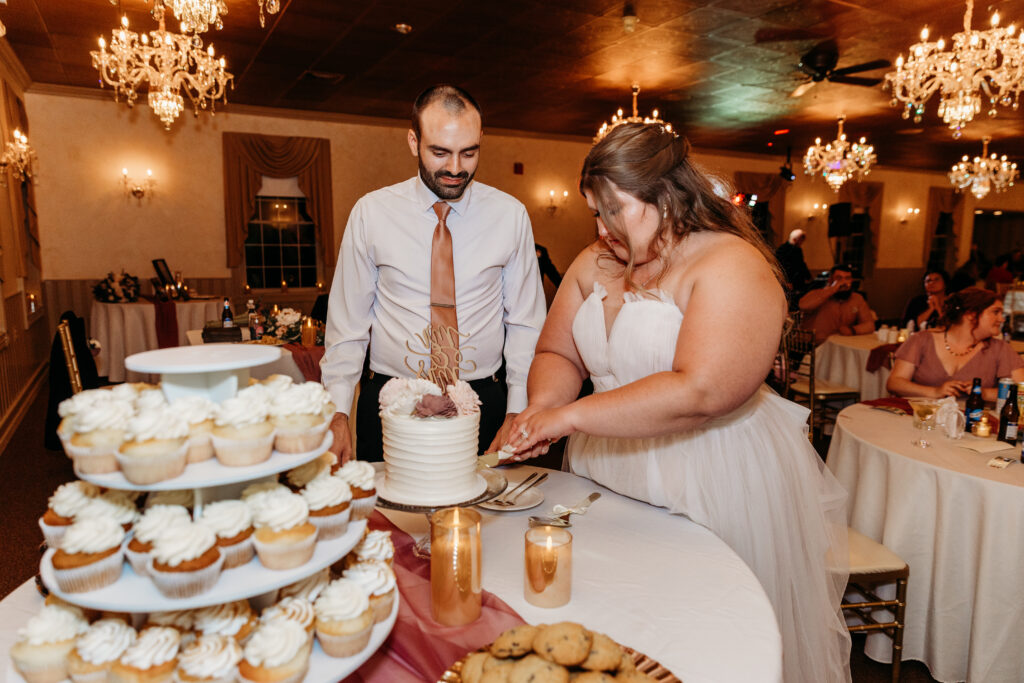
This one was not Eliza’s wedding, but it is seared into her memory. A cake arrived at the venue having reportedly fallen during transport not once but twice. The result was a caved-in side that required flowers strategically placed around the back to hide the damage.
The bride was still getting ready when the cake arrived, so the team made a judgment call and kept quiet until after the ceremony. At the end of the night, the bride declared her wedding day perfect.
“Why not just the cake?” Eliza laughed. “It’s fine.”
The takeaway, though, is genuinely useful: if you are getting married somewhere warm, keep your cake refrigerated until the last possible moment. Wedding cakes can sweat. They can also avalanche. The structure is more fragile than it looks, and a hot barn is its enemy.
The Timeline Is a Living Document
One of the most practical sections of the conversation was about wedding day timelines and how they almost never survive contact with reality.
Eliza confessed she used to be the planner who would come for you if the day was running a minute behind. She has evolved. “Wedding days are not just productions,” she said. “They’re a day that’s happening naturally.”
Now she asks every couple directly in her questionnaire: if the ceremony needs to push back five minutes, are you okay with that, or do you need me to hold the minute? That single question shapes every decision she makes on the actual day.
The most common culprits for timeline drift? Family arrivals, and weather. Someone’s grandfather shows up 20 minutes late, or worse, at the wrong venue entirely, and suddenly you are working with a 30-minute gap you did not plan for. Rain can push an outdoor ceremony into a different window entirely. These are not failures of planning. They are facts of life.
Family photos are another underestimated time sink. Couples consistently tell Eliza they want “about five.” What they actually want, once they write out the list, is closer to 25. At roughly two minutes per combination, that is the difference between a 10-minute block and a full hour. That math matters for every other part of the day.
Her practical advice for timelines: figure out your shuttles early, know your guest count before you do anything else, and build in breathing room you hope you will not need.
What Vendor Management Actually Looks Like
For full service couples, Eliza and her team handle all communication from start to finish: researching venues, going back and forth on contracts, catching errors before they reach the couple.
“People don’t realize how many emails go into this,” she said. The number of back-and-forth exchanges before a single vendor is even under contract is significant, and that is before you multiply it across every vendor on the list.
She shared one story that illustrated the value of that filtering role. A florist accidentally sent a credit card authorization form that contained a different client’s payment information. It never reached the couple because Eliza caught it first and sent it back. A small thing, maybe, but a potentially significant one for whoever’s card was on that form.
Budget management is another invisible service. Full service clients work with Eliza starting 12 to 18 months out, and she provides a spreadsheet that breaks down where money should go by percentage. She sees couples regularly make the mistake of spending too heavily on their venue and food and beverage minimums before they have accounted for everything else. Once you have locked in those costs, your flexibility elsewhere disappears.
Her standing advice: nail down your guest list first. A 150-person wedding and a 350-person wedding are fundamentally different financial undertakings, and every other decision flows from that number.
The Chairs in the Rain
When asked about the biggest pivot she has ever had to execute, Eliza had a story she described as the moment she considered closing her business.
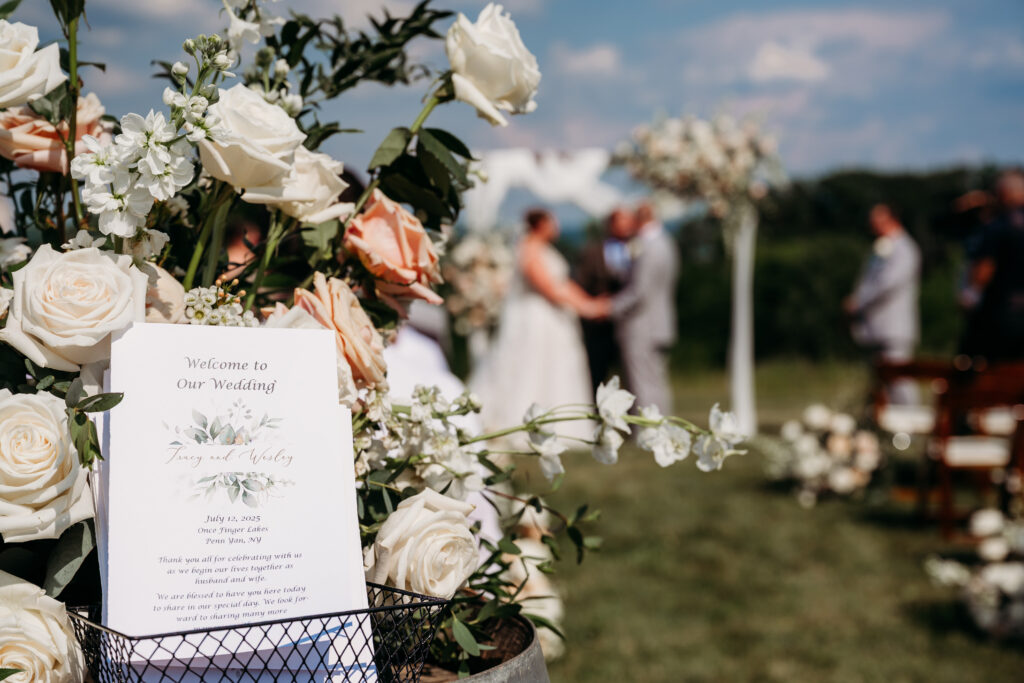
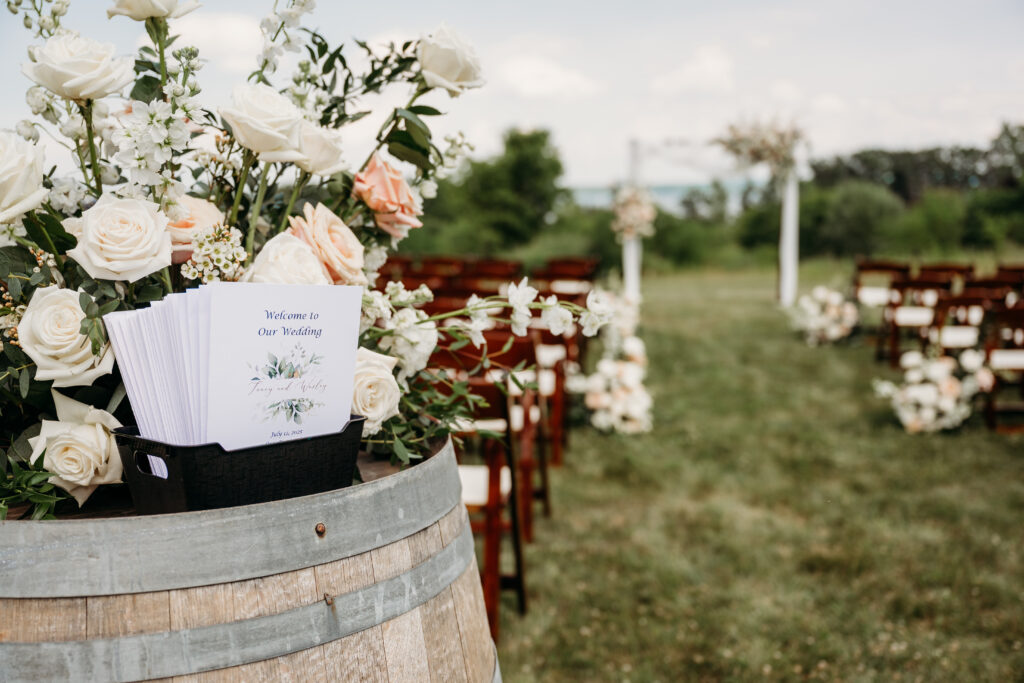
It was an outdoor ceremony on private property for 150 guests. Her company did not yet have a policy requiring two sets of chairs, so the plan was to move the ceremony chairs into the reception tent during cocktail hour. Manageable in good conditions.
The conditions were not good. It was, by her description, the worst torrential downpour she had seen in her career. She and her team of six were moving 150 chairs in a deluge, cocktail hour guests were stuck in the tent with nowhere to sit, and nobody could go outside.
“I was crying,” she said. “It was after that one where I was like, I think I’m shutting my business down.”
They got through it. And the policy now requires two sets of chairs.
The broader lesson she drew from that experience is one she returns to often: if your Plan A requires perfect circumstances, you need a Plan B, and you need to actually love your Plan B. She sees this most often with rain plans. Couples will book a venue, hate the indoor backup option, and hope they will not need it. In New York, she pointed out, the odds are roughly 50/50.
Family Dynamics Are Part of the Job
Eliza is candid that the logistical problems are sometimes easier to manage than the interpersonal ones. Families are complicated, weddings concentrate that complexity, and someone has to quietly hold it together.
She is careful to acknowledge nuance here. When families are contributing financially, they do have some standing to weigh in. But the couple gets the final say, full stop. She also notes that the couple who says “my mom and I are totally on the same page” almost never turns out to have a mom who is totally on the same page, especially if the mom has opinions about what worked at her own wedding.
Her consistent advice: set your boundaries early, hold them consistently, and do not make it your job to resolve every family conflict that surfaces during the planning process. Some things are worth letting go. Others are not. Knowing which is which takes practice and a clear sense of what actually matters to you.
What You Are Actually Paying For
This is the question that comes up constantly, and Eliza has a clear answer.
A well-connected planner often comes with relationships that translate to better rates with vendors. They catch budget overruns before they happen. They protect you from contracts with errors. They manage the volume of communication that planning a wedding actually generates. And on the day itself, they make decisions so you do not have to.
But the most unexpected piece of advice she offered had nothing to do with logistics at all.
“Remember to date in the process.”
Wedding planning can strain a relationship in ways couples do not anticipate. The planning itself becomes the relationship’s center of gravity, and before long every conversation is about flowers or seating charts or food minimums. Eliza tells her couples to actively schedule time together that has nothing to do with the wedding.
She mentioned the Adventure Challenge book, a scratch-off date night activity book, as something she uses personally with her own partner. The specific tool matters less than the intention behind it: protect the relationship that the wedding is supposed to be celebrating.
“The wedding day is an investment,” she said, “but the marriage is going to be longer.”